
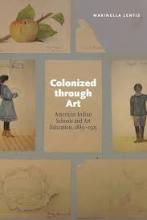
Colonized through art : American Indian schools and art education, 1889-1915
Lentis, Marinella.
Indianie, Internaty, Szkolnictwo, Historia, Sztuka, Kolonializm, Adaptacja kulturowa, Ameryka Północna, Stany Zjednoczone (USA), Sztuka indiańska, 1801-1900 1801-1900, 1901-1914 1901-1914
dostępne:
1 z 1
Autor
Lentis, Marinella.
Tytuł
Colonized through art : American Indian schools and art education, 1889-1915
Objętość
XXVII, 421 stron :
Rozmiary
24 cm
Informacje dodatkowe
Bibliografia na stronach 379-405. Indeks.
Hasła przedmiotowe
Indianie
Internaty
Szkolnictwo
Historia
Sztuka
Kolonializm
Adaptacja kulturowa
Ameryka Północna
Stany Zjednoczone (USA)
Sztuka indiańska
1801-1900 1801-1900
1901-1914 1901-1914
Streszczenie
"An examination of government-controlled schools' use of art education as a process for assimilating American Indian children at the turn of the twentieth century."--Provided by publisher.
Colonized through Art explores how the federal government used art education for American Indian children as an instrument for the “colonization of consciousness,” hoping to instill the values and ideals of Western society while simultaneously maintaining a political, social, economic, and racial hierarchy.
Focusing on the Albuquerque Indian School in New Mexico, the Sherman Institute in Riverside, California, and the world’s fairs and local community exhibitions, Marinella Lentis examines how the U.S. government’s solution to the “Indian problem” at the end of the nineteenth century emphasized education and assimilation. Educational theories at the time viewed art as the foundation of morality and as a way to promote virtues and personal improvement. These theories made art a natural tool for policy makers and educators to use in achieving their assimilationist goals of turning student “savages” into civilized men and women. Despite such educational regimes for students, however, Indigenous ideas about art often emerged “from below,” particularly from well-known art teachers such as Arizona Swayney and Angel DeCora.
Colonized through Art explores how American Indian schools taught children to abandon their cultural heritage and produce artificially “Native” crafts that were exhibited at local and international fairs. The purchase of these crafts by the general public turned students’ work into commodities and schools into factories.
020
%a 9780803255449 (cloth : alk. paper)
020
%a 9781496228215 (paperback : alk. paper)
100
%a Lentis, Marinella.
245
%a Colonized through art :
%b American Indian schools and art education, 1889-1915 /
260
%a
%b
%c
300
%a XXVII, 421 stron :
%b ilustracje ;
%c 24 cm
504
%a Bibliografia na stronach 379-405. Indeks.
520
%a "An examination of government-controlled schools' use of art education as a process for assimilating American Indian children at the turn of the twentieth century."--Provided by publisher.
520
%a Colonized through Art explores how the federal government used art education for American Indian children as an instrument for the “colonization of consciousness,” hoping to instill the values and ideals of Western society while simultaneously maintaining a political, social, economic, and racial hierarchy.
Focusing on the Albuquerque Indian School in New Mexico, the Sherman Institute in Riverside, California, and the world’s fairs and local community exhibitions, Marinella Lentis examines how the U.S. government’s solution to the “Indian problem” at the end of the nineteenth century emphasized education and assimilation. Educational theories at the time viewed art as the foundation of morality and as a way to promote virtues and personal improvement. These theories made art a natural tool for policy makers and educators to use in achieving their assimilationist goals of turning student “savages” into civilized men and women. Despite such educational regimes for students, however, Indigenous ideas about art often emerged “from below,” particularly from well-known art teachers such as Arizona Swayney and Angel DeCora.
Colonized through Art explores how American Indian schools taught children to abandon their cultural heritage and produce artificially “Native” crafts that were exhibited at local and international fairs. The purchase of these crafts by the general public turned students’ work into commodities and schools into factories.
648
%a 1801-1900%a 1801-1900
648
%a 1901-1914%a 1901-1914
650
%a Indianie
650
%a Internaty
650
%a Szkolnictwo
650
%a Historia
650
%a Sztuka
650
%a Kolonializm
650
%a Adaptacja kulturowa
651
%a Ameryka Północna
651
%a Stany Zjednoczone (USA)
655
%a Sztuka indiańska
Dostępne egzemplarze
1.
Numer inwentarzowy: 14365
Sygnatura: 14365/II
Sygnatura: 14365/II
Status: Do wypożyczenia