Tytuł
Republika ludzi młodych : opowieść o nowym człowieku
ISBN
978-83-244-1219-8 (oprawa miękka) : zł 59,90
Miejsce wydania
Warszawa :
Rok wydania
copyright 2026.
Objętość
307, [1] strona :
Hasła przedmiotowe
Centralny Ośrodek Wychowawczo-Szkoleniowy im. Janusza Korczaka (Bartoszyce)
Robotnicze Towarzystwo Przyjaciół Dzieci
Child care History History 20th century 20th century Poland Poland
World War, 1939-1945 Children Children
Repatriation History History 20th century 20th century Poland Poland
Orphans History History 20th century 20th century Poland Poland
Orphanages History History 20th century 20th century Poland Poland
Education History History 20th century 20th century Poland Poland
Children Institutional care Institutional care 20th century 20th century Poland Poland
Bartoszyce (woj. warmińsko-mazurskie)
Western and Northern Territories (Poland) History History
Bartoszyce (Poland) History History
Streszczenie
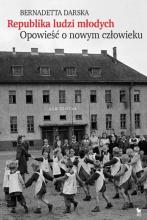
Po II wojnie światowej w Polsce powstał Centralny Ośrodek Wychowawczo-Szkoleniowy im. Janusza Korczaka w Bartoszycach, największy dom dziecka w kraju, mający przyjąć trzy tysiące sierot. Projekt ten był eksperymentem mającym na celu stworzenie nowego człowieka i zintegrowanie dzieci z różnych środowisk: autochtonów, powstańców warszawskich, repatriantów, wychowanków z Uralu oraz reemigrantów z Francji. Ośrodek mieścił się w dawnych koszarach Ludendorffa, w przestrzeni oddzielonej od miasta, otoczonej lasem i rzeką. Publikacja opisuje historię tego wyjątkowego miejsca, jego mieszkańców i pracowników, a także zapomniany dziś projekt, który na krótko uczynił Bartoszyce miastem dzieci. Po II wojnie światowej w Polsce powstał Centralny Ośrodek Wychowawczo-Szkoleniowy im. Janusza Korczaka w Bartoszycach, największy dom dziecka w kraju, mający przyjąć trzy tysiące sierot. Projekt ten był eksperymentem mającym na celu stworzenie nowego człowieka i zintegrowanie dzieci z różnych środowisk: autochtonów, powstańców warszawskich, repatriantów, wychowanków z Uralu oraz reemigrantów z Francji. Ośrodek mieścił się w dawnych koszarach Ludendorffa, w przestrzeni oddzielonej od miasta, otoczonej lasem i rzeką. Publikacja opisuje historię tego wyjątkowego miejsca, jego mieszkańców i pracowników, a także zapomniany dziś projekt, który na krótko uczynił Bartoszyce miastem dzieci.
After World War II, the Central Educational and Training Center named after Janusz Korczak was established in Bartoszyce, Poland, as the largest orphanage in the country, intended to accommodate three thousand orphans. This project was an experiment aimed at creating a new kind of person and integrating children from diverse backgrounds: locals, Warsaw Uprising participants, repatriates, children from the Urals, and re-emigrants from France. The center was located in the former Ludendorff barracks, separated from the town and surrounded by forest and river. The publication describes the history of this unique place, its residents and staff, and the forgotten project that briefly made Bartoszyce a city of children. After World War II, the Central Educational and Training Center named after Janusz Korczak was established in Bartoszyce, Poland, as the largest orphanage in the country, intended to accommodate three thousand orphans. This project was an experiment aimed at creating a new kind of person and integrating children from diverse backgrounds: locals, Warsaw Uprising participants, repatriates, children from the Urals, and re-emigrants from France. The center was located in the former Ludendorff barracks, separated from the town and surrounded by forest and river. The publication describes the history of this unique place, its residents and staff, and the forgotten project that briefly made Bartoszyce a city of children.
080
%a 364.4-54-053.2(438)
100
%a Darska, Bernadetta
245
%a Republika ludzi młodych :
%b opowieść o nowym człowieku /
260
%a Warszawa :
%b Iskry,
%c copyright 2026.
300
%a 307, [1] strona :
%b fotografie ;%b fotografie ;
%c 21 cm.
520
%a Po II wojnie światowej w Polsce powstał Centralny Ośrodek Wychowawczo-Szkoleniowy im. Janusza Korczaka w Bartoszycach, największy dom dziecka w kraju, mający przyjąć trzy tysiące sierot. Projekt ten był eksperymentem mającym na celu stworzenie nowego człowieka i zintegrowanie dzieci z różnych środowisk: autochtonów, powstańców warszawskich, repatriantów, wychowanków z Uralu oraz reemigrantów z Francji. Ośrodek mieścił się w dawnych koszarach Ludendorffa, w przestrzeni oddzielonej od miasta, otoczonej lasem i rzeką. Publikacja opisuje historię tego wyjątkowego miejsca, jego mieszkańców i pracowników, a także zapomniany dziś projekt, który na krótko uczynił Bartoszyce miastem dzieci.%a Po II wojnie światowej w Polsce powstał Centralny Ośrodek Wychowawczo-Szkoleniowy im. Janusza Korczaka w Bartoszycach, największy dom dziecka w kraju, mający przyjąć trzy tysiące sierot. Projekt ten był eksperymentem mającym na celu stworzenie nowego człowieka i zintegrowanie dzieci z różnych środowisk: autochtonów, powstańców warszawskich, repatriantów, wychowanków z Uralu oraz reemigrantów z Francji. Ośrodek mieścił się w dawnych koszarach Ludendorffa, w przestrzeni oddzielonej od miasta, otoczonej lasem i rzeką. Publikacja opisuje historię tego wyjątkowego miejsca, jego mieszkańców i pracowników, a także zapomniany dziś projekt, który na krótko uczynił Bartoszyce miastem dzieci.
520
%a After World War II, the Central Educational and Training Center named after Janusz Korczak was established in Bartoszyce, Poland, as the largest orphanage in the country, intended to accommodate three thousand orphans. This project was an experiment aimed at creating a new kind of person and integrating children from diverse backgrounds: locals, Warsaw Uprising participants, repatriates, children from the Urals, and re-emigrants from France. The center was located in the former Ludendorff barracks, separated from the town and surrounded by forest and river. The publication describes the history of this unique place, its residents and staff, and the forgotten project that briefly made Bartoszyce a city of children.%a After World War II, the Central Educational and Training Center named after Janusz Korczak was established in Bartoszyce, Poland, as the largest orphanage in the country, intended to accommodate three thousand orphans. This project was an experiment aimed at creating a new kind of person and integrating children from diverse backgrounds: locals, Warsaw Uprising participants, repatriates, children from the Urals, and re-emigrants from France. The center was located in the former Ludendorff barracks, separated from the town and surrounded by forest and river. The publication describes the history of this unique place, its residents and staff, and the forgotten project that briefly made Bartoszyce a city of children.
610
%a Centralny Ośrodek Wychowawczo-Szkoleniowy im. Janusza Korczaka (Bartoszyce)
610
%a Robotnicze Towarzystwo Przyjaciół Dzieci
650
%a Child care
%x History%x History
%y 20th century%y 20th century
%z Poland%z Poland
650
%a World War, 1939-1945
%x Children%x Children
650
%a Repatriation
%x History%x History
%y 20th century%y 20th century
%z Poland%z Poland
650
%a Orphans
%x History%x History
%y 20th century%y 20th century
%z Poland%z Poland
650
%a Orphanages
%x History%x History
%y 20th century%y 20th century
%z Poland%z Poland
650
%a Education
%x History%x History
%y 20th century%y 20th century
%z Poland%z Poland
650
%a Children
%x Institutional care%x Institutional care
%y 20th century%y 20th century
%z Poland%z Poland
651
%a Bartoszyce (woj. warmińsko-mazurskie)
651
%a Western and Northern Territories (Poland)
%x History%x History
651
%a Bartoszyce (Poland)
%x History%x History
655
%a Reportaż historyczny
920
%a 978-83-244-1219-8 (oprawa miękka) : zł 59,90